

Introduction
Black seed oil, extracted from the seeds of Nigella sativa, has been used for centuries in traditional medicine systems such as Unani, Ayurveda, and Middle Eastern healing practices. From supporting immunity to improving skin and metabolic health, black seed oil benefits are deeply rooted in history and research.
Often referred to as “the seed of blessing,” this oil has gained modern attention due to its impressive nutritional profile and scientifically studied therapeutic effects.
What Is Black Seed Oil?
Black seed oil comes from small black seeds of the Nigella sativa plant, native to Southwest Asia. The oil is rich in:
- Thymoquinone (its most active compound)
- Essential fatty acids (omega-6 and omega-9)
- Antioxidants
- Vitamins and minerals in trace amounts
Key Active Compound: Thymoquinone
Thymoquinone is responsible for many of the benefits of black seed oil. Scientific studies published in journals like Phytotherapy Research and Journal of Ethnopharmacology highlight its antioxidant, anti-inflammatory, and antimicrobial properties.
Top Black Seed Oil Benefits for Overall Health
1. Supports a Strong Immune System
One of the most researched black seed oil benefits is immune system support.
How it works scientifically:
Thymoquinone helps regulate immune responses by reducing oxidative stress and inflammation. A study in Immunopharmacology and Immunotoxicology found that Nigella sativa enhances immune cell activity while balancing overactive immune reactions.
Benefits include:
- Improved resistance to infections
- Reduced inflammation
- Support during seasonal illnesses
2. Powerful Anti-Inflammatory Effects
Chronic inflammation is linked to conditions such as arthritis, heart disease, and metabolic disorders. Its benefits include natural inflammation control.
Research shows that thymoquinone inhibits inflammatory mediators like prostaglandins and leukotrienes, similar to how some anti-inflammatory medications work, but without harsh side effects when used moderately.
3. Improves Digestive Health
Black seed oil has traditionally been used to relieve digestive discomfort.
Digestive benefits include:
- Reduced bloating and gas
- Support for gut lining integrity
- Antibacterial action against Helicobacter pylori (linked to stomach ulcers)
A clinical study published in World Journal of Gastroenterology found that black seed oil, when combined with standard therapy, helped suppress H. pylori growth.
4. Supports Heart Health and Cholesterol Balance
Among the most practical benefits of black seed oil is its cardiovascular support.
How it helps:
- May reduce LDL (bad cholesterol)
- Helps maintain healthy blood pressure
- Supports blood vessel flexibility
A study in the Journal of Endocrinology and Metabolism showed that regular supplementation improved lipid profiles in adults with mild hyperlipidemia.
Black Seed Oil Benefits for Skin and Hair
5. Enhances Skin Health Naturally
Black seed oil benefits for skin are linked to its antibacterial and anti-inflammatory properties.
Skin-related benefits include:
- Calming eczema and psoriasis symptoms
- Helping acne-prone skin by reducing bacteria
- Supporting wound healing
Its fatty acid content helps restore the skin barrier, reducing moisture loss.
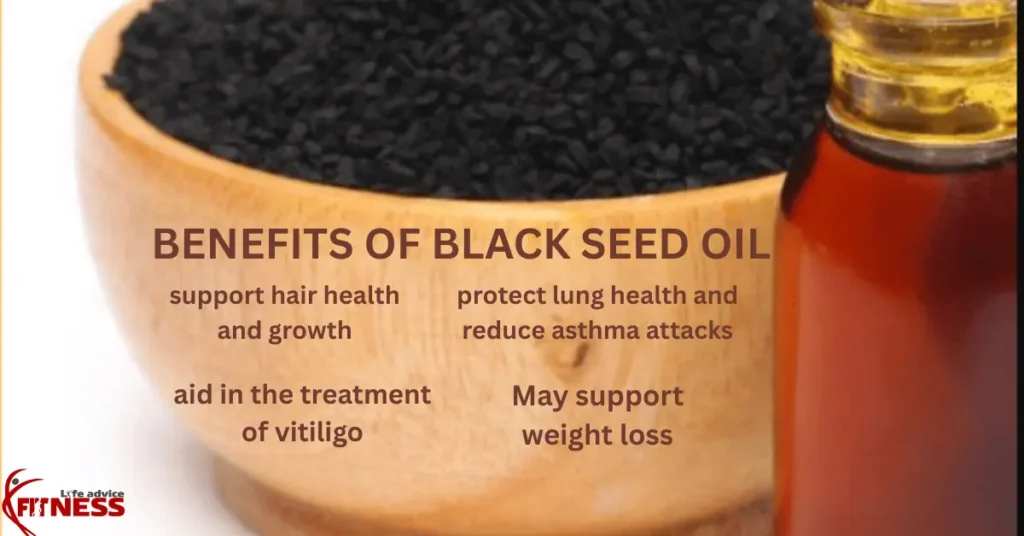
Research suggests that topical black seed oil (Nigella sativa) may have potential as an adjunctive treatment for vitiligo.
In a small clinical study of 33 patients, 33 patients applied a cream containing Nigella sativa seed oil twice daily for six months. Statistically significant repigmentation was observed in the hands, face, and genital areas, indicating an improvement in pigment loss compared to baseline.
PubMed Laboratory research also shows that extracts from Nigella sativa can stimulate melanogenesis (the process of melanin production) and increase melanin content and tyrosinase activity in melanocyte models, which are the cells responsible for skin colour. doaj.org
While these findings are promising, larger clinical studies are still needed to confirm the efficacy and safety of black seed oil before it can be widely recommended for the treatment of vitiligo.
6. Promotes Hair Growth and Scalp Health
Black seed oil is commonly used in hair oils and masks.
Hair benefits include:
- Nourishing hair follicles
- Reducing scalp inflammation
- Improving hair strength and shine
Research suggests that antioxidants in black seed oil protect hair follicles from oxidative damage, a known contributor to hair thinning.
Metabolic and Hormonal Black Seed Oil Benefits
7. Supports Blood Sugar Balance
Emerging research highlights black seed oil benefits for metabolic health.
Studies in Complementary Therapies in Medicine indicate that black seed oil may improve insulin sensitivity and fasting blood glucose levels in people with type 2 diabetes when used alongside medical care.
8. May Aid in Weight Management
While not a magic solution, black seed oil may support healthy weight goals.
Scientific research suggests that Nigella sativa supplementation can modestly support weight management when used as a complementary aid. Meta-analyses of randomised controlled trials have found that taking Nigella sativa supplements is associated with significant reductions in body weight and body mass index (BMI) compared with placebo, with average weight decreases of around 1.5 kg.
ScienceDirect Some clinical studies also show that when Nigella sativa oil is used alongside a low-calorie diet, participants experienced greater reductions in body weight and waist circumference than those on a diet alone. PubMed Laboratory research further suggests that components of black seed may inhibit fat cell formation and influence lipid metabolism, offering biologically plausible mechanisms for its effects. PubMed
Possible mechanisms include:
- Improved fat metabolism
- Appetite regulation
- Reduced inflammation linked to obesity
Scientific Evidence Behind Black Seed Oil Benefits
Modern research has closely examined Nigella sativa and confirmed many traditional claims through laboratory, animal, and human studies. The therapeutic power of black seed oil benefits comes primarily from its bioactive compounds, especially thymoquinone, which has been extensively studied.
1. Antioxidant Activity Proven in Scientific Studies
Oxidative stress occurs when free radicals damage cells, contributing to ageing and chronic diseases such as cancer, diabetes, and cardiovascular disorders.
Scientific findings:
Studies published in peer-reviewed journals such as Oxidative Medicine and Cellular Longevity demonstrate that thymoquinone significantly reduces oxidative stress by increasing antioxidant enzymes, like:
- Superoxide dismutase (SOD)
- Catalase
- Glutathione peroxidase
This antioxidant mechanism explains many black seed oil benefits related to immunity, skin protection, and organ health.
2. Anti-Inflammatory Mechanisms Explained
Inflammation is regulated by biochemical pathways involving cytokines and enzymes such as COX-2 and TNF-α.
What science shows:
Research in Phytotherapy Research confirms that thymoquinone inhibits inflammatory mediators by blocking:
- Nuclear factor-kappa B (NF-κB) signalling
- Pro-inflammatory cytokines
This explains why black seed oil benefits are observed in inflammatory conditions like asthma, arthritis, and digestive disorders.
3. Clinical Evidence for Blood Sugar Control
Several human clinical trials have evaluated black seed oil’s role in glycemic control.
Scientific observations:
- Improved fasting blood glucose
- Reduced HbA1c levels
- Enhanced insulin sensitivity
A controlled trial published in the Journal of Endocrinology & Metabolism reported that adults with type 2 diabetes experienced significant metabolic improvements after consistent black seed supplementation alongside standard care.
4. Antimicrobial and Antiviral Properties
One of the most impressive black seed oil benefits is its broad antimicrobial action.
Research-based evidence:
Laboratory studies show that Nigella sativa exhibits activity against:
- Gram-positive and gram-negative bacteria
- Certain fungi, such as Candida albicans
- Some viruses by immune modulation
Thymoquinone disrupts microbial cell membranes and inhibits biofilm formation, making black seed oil valuable for gut, skin, and immune health.
5. Respiratory Health and Asthma Support
Black seed oil benefits for respiratory conditions are supported by clinical research.
Thymoquinone acts as a natural bronchodilator and antihistamine. Studies published in the Indian Journal of Physiology and Pharmacology observed improved lung function and reduced asthma symptoms in patients using Nigella sativa oil.
6. Neuroprotective and Brain Health Benefits
Emerging evidence suggests black seed oil benefits extend to brain and nervous system health.
Scientific insight:
Animal studies indicate thymoquinone protects neurons by reducing oxidative damage and inflammation in brain tissue. These effects are being studied for potential roles in neurodegenerative conditions such as Alzheimer’s disease.
How to Use Black Seed Oil Safely
Common form of use
- Oral: ½ to 1 teaspoon daily with meals
- Topical: Applied directly to skin or mixed with carrier oils
- Capsules: Standardised doses for convenience
Safety Considerations
- Avoid excessive doses
- Pregnant or breastfeeding women should consult a healthcare professional
- May interact with blood pressure or blood sugar medications
Why Science Supports Traditional Use
For centuries, black seed oil benefits were based on observation and traditional wisdom. Today, scientific research explains why it works:
- Antioxidants protect cells
- Anti-inflammatory pathways reduce disease risk
- Fatty acids support cellular membranes
- Immune modulation balances defence mechanisms
This convergence of traditional medicine and modern science makes black seed oil one of the most researched natural remedies in the world.
FAQs
Is black seed oil safe for daily use?
Yes, when used in moderate amounts, about 1tsp per day, but individual tolerance may vary.
How long does it take to see black seed oil benefits?
Some benefits, like digestive relief, may appear within days, while others, such as improved cholesterol levels, may take several weeks.
Can black seed oil boost immunity naturally?
Yes, scientific studies suggest that black seed oil supports immune regulation through its antioxidant and anti-inflammatory compounds.
Is black seed oil good for skin conditions like acne?
Yes, its antibacterial and anti-inflammatory properties make it helpful for managing acne and calming irritated skin.
Can black seed oil help with hair fall?
It may help reduce hair fall caused by inflammation or scalp conditions, especially when used consistently.
Does black seed oil have side effects?
Mild side effects like digestive discomfort may occur if taken in excess. Always start with small amounts.
Conclusion
Black seed oil benefits have increased with modern science. From immune support and inflammation reduction to improved skin, hair, heart, and metabolic health, this powerful oil offers a natural, holistic approach to wellness. Its key compound, thymoquinone, plays a central role in delivering these effects through antioxidant and anti-inflammatory mechanisms.
When used responsibly and as part of a healthy lifestyle, black seed oil can be a valuable addition to daily wellness routines. As with any natural remedy, consistency, moderation, and informed use are essential to experiencing the full range of black seed oil benefits.